
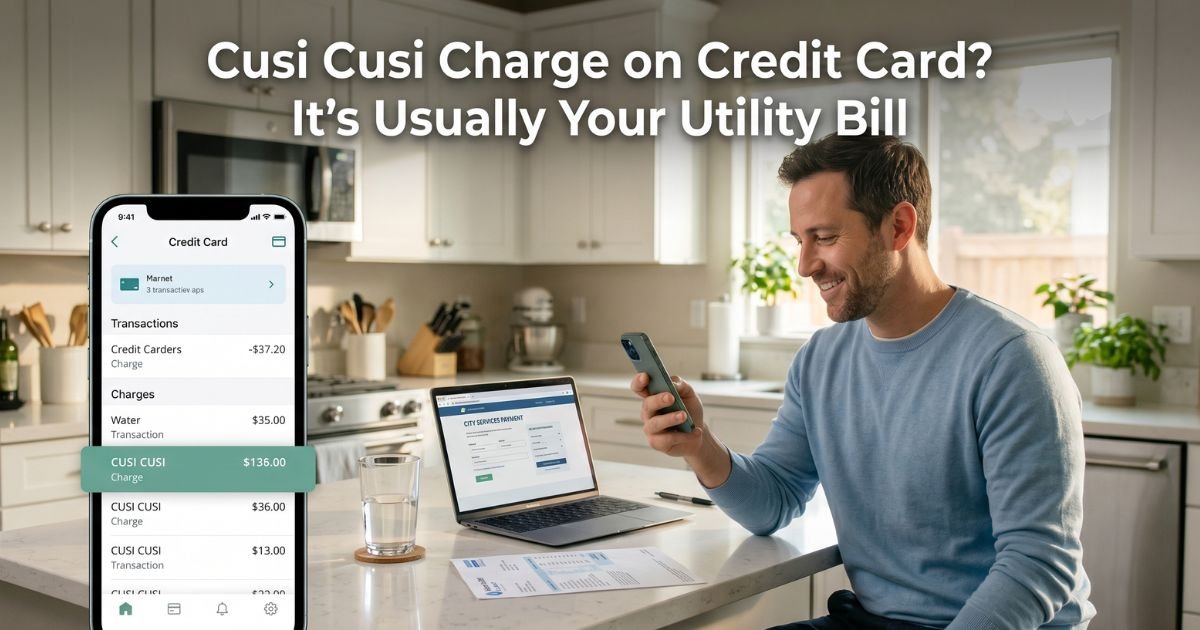
Hey there. If “Cusi Cusi” or something like “CUSI*CUSI” just showed up on your credit card statement, you are probably wondering what on earth it is. It happens to plenty of people who pay bills online. You are not alone in that sudden “wait, did I do that?” feeling.
Don’t worry, we will explain exactly why this charge appears, when it is completely normal, and the easy steps to confirm or fix it if it does not match anything you remember.
Table of Contents
Why Does a Cusi Cusi Charge Show Up on My Credit Card Statement?
Cusi Cusi refers to Continental Utility Solutions, Inc., better known as CUSI. They create the software and online payment portals that many cities and towns use for water, sewer, electric, gas, and trash bills.
When you pay your utility bill by credit or debit card through your local utility’s website, the charge often posts under a shortened name like “CUSI” or “CUSI CUSI.” Banks abbreviate merchant descriptions, so it looks mysterious even though it is a real payment you made.
Sometimes a small convenience fee gets added for using a card instead of a bank account. That is standard for most online utility portals.
Common Reasons for Seeing a Cusi Cusi Charge
These charges pop up in everyday situations. Here are the most typical ones:
- You paid your monthly water, sewer, electric, or gas bill online.
- A household member or roommate used the shared card for the utility payment.
- An automatic recurring payment went through via the CUSI portal.
- You set up a one-time payment on your city’s utility website.
- A past-due balance or late fee cleared through the portal.
The amount usually matches your bill exactly, or it includes that small processing fee.
Is the Cusi Cusi Charge Legitimate or Fraud?
In almost every case, it is 100 percent legitimate. CUSI powers payment systems for over a thousand utilities across the United States. No widespread scam reports link this name to unauthorized charges.
Still, double-check if the date and amount do not line up with any recent utility activity. Maybe you paid by check or auto-draft instead. Or perhaps someone else in the house handled the bill.
If nothing adds up at all, treat it like any unknown charge and verify it right away.
Quick Comparison Table: Typical Cusi Cusi Charge vs. Possible Issue
| Situation | What It Looks Like | Next Step |
|---|---|---|
| Online utility payment | Amount matches your water or electric bill | Note it and move on |
| No recent bill payment | Random date with no household use | Contact utility or bank |
| Includes convenience fee | Slightly higher than the actual bill | Expected for card payments |
| Repeated or large charges | Multiple hits without explanation | Dispute if unrecognized |
This table helps you decide quickly.
Step-by-Step Guide: How to Handle a Cusi Cusi Charge
You can sort this out in minutes. Follow these simple steps:
- Log into your local utility website or app. Check recent payments and see if the charge matches a bill you paid.
- Look at your email for a receipt from your city or town’s utility portal.
- Contact your utility provider directly. Give them the charge date and amount, and they can confirm the payment.
- Call your credit card issuer if needed. They can often see the full merchant details or help start a quick check.
- Turn on transaction alerts. This way, future payments never surprise you again.
Most people clear the mystery with one quick login or phone call.
How to Dispute a Cusi Cusi Charge If It Is Not Yours
If the charge truly does not belong to you or anyone on your card, act fast. You usually have up to 60 days from the statement date.
Take screenshots of the charge first. Then call the number on the back of your card and request a dispute. Banks often issue a provisional credit while they investigate.
Utility companies keep good records, so these situations usually resolve smoothly.
Tips to Avoid Future Mystery Utility Charges
Once you handle this one, let us make sure everything stays clear going forward. A few smart habits help a lot.
- Pay utilities through your bank account instead of a card to avoid extra fees.
- Set up paperless billing and email alerts from your utility.
- Review your credit card statement weekly instead of waiting until the end of the month.
- Use your card app to set spending alerts for anything over $10.
- Report anything suspicious to the FTC at ReportFraud.ftc.gov to help others stay protected too.
These small changes take almost no time but save big headaches later.
Real Stories from People Who Saw the Same Charge
Plenty of folks have been right where you are. One family in Texas spotted a “CUSI CUSI” charge after paying their water bill online late at night. A quick check of the city portal showed the exact match.
Another homeowner in Ohio realized their adult child used the shared card for the electric bill. Both cases wrapped up easily once they logged in.
These everyday examples show how common and straightforward these charges really are.
Staying on Top of Utility Payments in 2026
Utility billing portals like CUSI make paying bills faster and more convenient. Many now offer auto-pay, usage trackers, and mobile apps.
If you see similar names such as “CUSI*Utility” or your city’s portal code, the same steps apply. It is all part of the same transparent system.
FAQs: Cusi Cusi Charge on Credit Card
Q. What Does a Cusi Cusi Charge on Credit Card Usually Mean?
A. It almost always means you or someone on your card paid a water, sewer, electric, gas, or trash bill through your local utility’s online portal powered by CUSI.
Q. Can I Dispute a Cusi Cusi Charge If I Don’t Recognize It?
A. Yes. Contact your credit card company right away and explain it is unrecognized. Share any details you have. They will investigate and usually issue a credit while looking into it.
Q. How Do I Prevent Mystery Charges Like Cusi Cusi in the Future?
A. Set up auto-pay from your bank account, enable utility email alerts, and turn on real-time card notifications. These habits let you catch and confirm payments immediately.
Conclusion
A Cusi Cusi charge on credit card is usually just your utility bill showing up under the payment processor’s name. By checking your utility portal and following the simple steps above, you can verify it quickly or resolve any mix-up.
You have the tools to keep your finances clear and stress-free. Take that quick action now, and you will feel way better in no time.
Disclaimer: This article provides general information based on publicly reported consumer experiences and is not legal or financial advice. Always contact your credit card issuer, utility provider, or a professional advisor for your specific situation.
Meet the Author
