
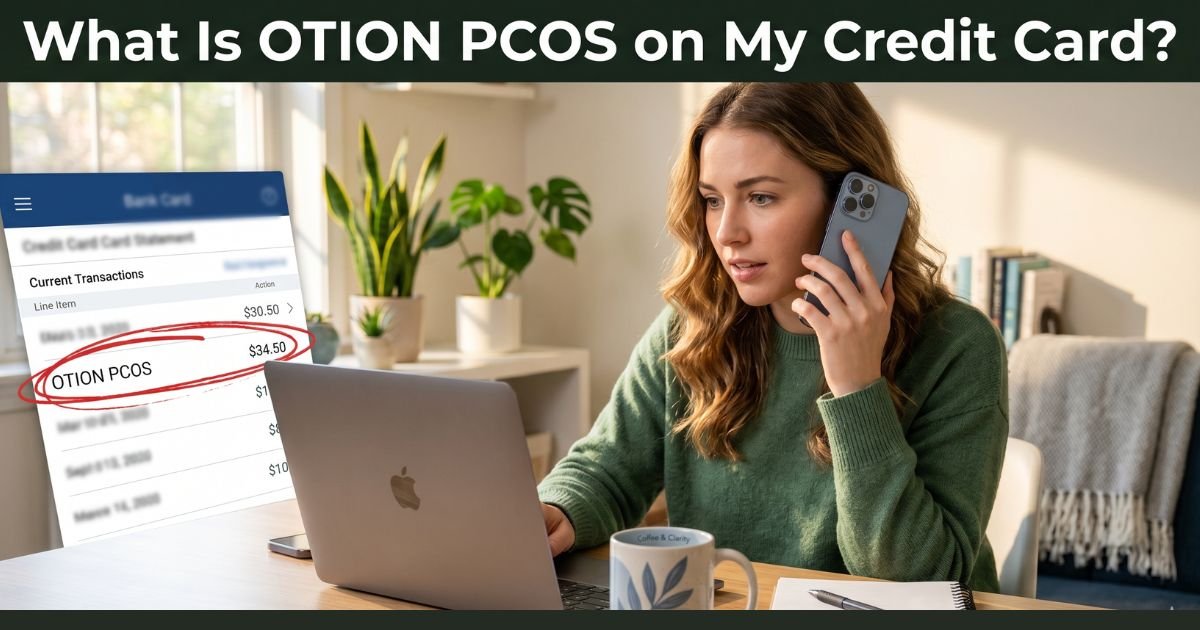
Have you glanced at your credit card statement and spotted “OTION PCOS” staring back at you? Your stomach probably dropped for a second. You’re not alone.
Plenty of women see this exact mysterious line item every month and wonder if it’s a glitch, a scam, or something they signed up for during a late-night scroll.
The good news is that an OTION PCOS charge on credit card is almost always tied to a legitimate subscription for PCOS management tools. But that doesn’t mean you should just let it slide.
Let’s unpack exactly what it means, why it shows up, and the easy steps to handle it today.
Table of Contents
Understanding Mysterious Charges Like OTION PCOS
If you’re asking “What on earth is OTION PCOS?”, you’re asking the smart question. This descriptor usually comes from online PCOS programs, apps, or telehealth services that help women manage Polycystic Ovary Syndrome.
PCOS affects millions of women, causing issues like irregular periods, weight gain, and hormone imbalances. Many turn to digital subscriptions for meal plans, trackers, coaching, or virtual doctor visits.
“OTION” is likely a shortened or processed version of the merchant name or payment system (think “subscription option” or the company’s internal code). The “PCOS” part points straight to Polycystic Ovary Syndrome support services.
When these programs bill automatically, the descriptor often gets shortened on statements to save space. That’s why it looks so random and unfamiliar.
Now, here’s the relatable truth. You might have tried a free trial for a PCOS weight-loss plan or downloaded a hormone-tracking app months ago.
Life got busy, you forgot to cancel, and suddenly that small monthly fee shows up as an OTION PCOS credit card charge. It happens more than you think.
Why PCOS Subscription Services Use These Descriptors
PCOS-focused companies keep their billing clean and compliant, but they don’t always spell out the full name. Popular services include PCOS Weight Loss programs, PCOS Tracker apps, PCOS Sisters telehealth clinics, and nutrition coaching platforms. They charge recurring fees for ongoing access to recipes, personalized plans, community support, or virtual consultations.
These businesses process payments through standard gateways, which can turn the company name into something short like “OTION PCOS.” It’s not shady. It’s just how payment processors work to fit everything on one line.
Common Reasons You See an OTION PCOS Charge
Let’s make this super clear. Here are the top ways this charge appears on statements:
- You signed up for a monthly PCOS weight-loss or nutrition subscription
- You joined a telehealth membership for PCOS symptom management
- You downloaded a PCOS tracker app with premium features that auto-renew
- A free trial converted to a paid plan without you noticing the fine print
- Someone in your household used the card for a PCOS-related purchase
I hear stories like this all the time from readers: “I was desperate for help with my symptoms and signed up quickly. Now I don’t even remember which app it was!”
Sound familiar?
Is the OTION PCOS Charge Legitimate or Fraud?
In most cases, yes, it’s completely legitimate. These PCOS services are real businesses helping real women. They’re not scams. Still, unauthorized charges can sneak in through shared cards, old trials, or even identity mix-ups.
Quick checklist to check legitimacy fast:
- Does the amount match a small monthly fee ($10–$50 range)?
- Have you searched for PCOS apps or programs recently?
- Did anyone in your family mention hormone health or weight-loss tools?
- Can you log into any health apps on your phone and see an active subscription?
If everything lines up, breathe easy. It’s probably just an active membership.
What to Do If You Don’t Recognize the OTION PCOS Charge
Don’t panic and don’t ignore it. Here’s your simple action plan:
- Grab your statement and note the exact date, amount, and full descriptor.
- Search your email for “PCOS,” “subscription,” or the company names I mentioned earlier.
- Check your phone apps for anything related to hormone tracking or women’s health.
- Contact the service directly through their website or app to confirm and cancel.
- Call your card issuer if it truly doesn’t belong to you and file a dispute right away.
Most services make cancellation easy through their member portal. You just log in, find the subscription tab, and hit cancel. Done.
How to Cancel a PCOS Subscription Charge
Canceling is usually straightforward. Log into the app or website where you signed up. Look for “Account,” “Billing,” or “Subscription” settings. Many let you cancel in two clicks. If you can’t find it, email their support team with your order number or last four digits of the card they have on file.
Pro tip: Take a screenshot of the cancellation confirmation. It protects you if the charge tries to post again.
Tips to Avoid Future Surprise PCOS Charges
Want to stay ahead of the game? These habits have saved my readers from repeat headaches:
- Turn on transaction alerts for every purchase over $1
- Review your statements the same day they hit your email
- Use a separate card just for trial sign-ups so nothing sneaks onto your main card
- Set a calendar reminder 24 hours before any free trial ends
- Ask services to email you a receipt every time they bill
Small changes like these keep your finances clear and your stress low.
The Bigger Picture: Why PCOS Support Matters
Living with PCOS is tough enough without extra financial confusion. These subscription services exist because they fill a real gap. Many women struggle to find clear answers from traditional doctors. Online programs offer recipes, tracking tools, and community support that actually help with symptoms.
Still, you deserve transparency. If a charge feels off, you have every right to question it. The Consumer Financial Protection Bureau has great free guides on spotting and disputing unauthorized charges. Their official site is a solid resource worth bookmarking.
You’re taking control just by reading this. That’s a win.
FAQs: OTION PCOS Charge on Credit Card
Q. What Does OTION PCOS Mean on My Credit Card Statement?
A. OTION PCOS is a shortened billing descriptor used by PCOS subscription services for their monthly charges. It usually stands for a weight-loss plan, tracker app, or telehealth membership designed to help manage Polycystic Ovary Syndrome symptoms. The exact company name gets abbreviated by the payment processor.
Q. Is OTION PCOS a Scam or Legitimate Charge?
A. The charge is typically legitimate and comes from a real PCOS support service rather than fraud. Thousands of women use these programs for hormone balance and weight management. However, if you never signed up or don’t recall any PCOS-related purchase, treat it as potentially unauthorized and dispute it immediately with your card issuer.
Q. How Do I Stop OTION PCOS from Charging My Card Again?
A. Log into the PCOS service’s app or website, go to your account settings, and cancel the subscription right away. Most platforms let you do this instantly. After canceling, contact your credit card company to block future charges and set up alerts for any activity. This keeps your account safe moving forward.
Conclusion
Spotting an OTION PCOS charge on credit card doesn’t have to stress you out. It’s usually just a helpful (or forgotten) subscription for PCOS support. Take a deep breath, follow the steps above, and you’ll have it sorted quickly.
Disclaimer: This article is for informational purposes only and is not intended as financial, legal, or medical advice. Always consult with your credit card issuer, a licensed financial advisor, or a healthcare professional for guidance specific to your situation. Individual results may vary based on your unique circumstances.
Meet the Author
