
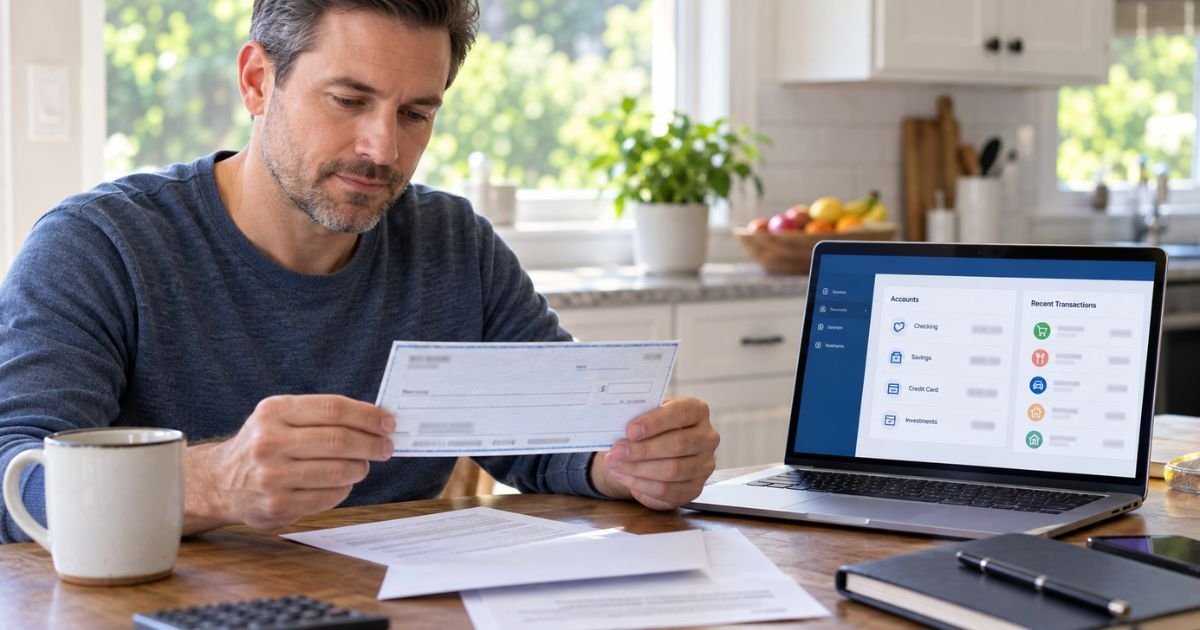
Looking for how to get a certified check online can feel confusing if your banking app has no “certified check” button. That gap is common. Many U.S. banks still certify checks only at a branch, and some no longer offer them at all.
Unfamiliar wording on a fee schedule does not mean you did something wrong. This guide explains what a certified check is, why online requests are rare, and what you can usually order from home instead.
Table of Contents
What a Certified Check Online Request Usually Means
A certified check is your personal check after your bank verifies two things. Federal banking rules describe it as a check the bank certifies by an officer’s signature.
The bank confirms your signature is genuine and that funds equal to the check amount have been set aside to pay it. The bank may also certify that it will pay the check when it is presented.
The money generally stays in your checking account. The bank typically freezes that amount so you cannot spend it twice.
You remain the person who wrote the check. That is different from a cashier’s check, which the bank issues on its own funds.
“Certified check online” usually means one of three things. You want a bank-verified paper check without visiting a branch. You saw “official check” in online banking and assumed it was certified.
Or a seller asked for certified funds and you are trying to send them from an app. Those situations often lead to a cashier’s check or a wire, not a true certified check.
Can you get a certified check fully online?
Usually, no. Certification generally requires a bank employee to review your ID, watch or confirm your signature, and stamp or sign the paper check. That step is hard to complete through an app.
Many banks have dropped certified checks and moved to cashier’s checks or official checks. Huntington Bank, for example, states on its official education page that it offers cashier’s checks and does not offer certified checks.
Other banks use “official check” as a catch-all label. Call or message your bank before you assume it still certifies personal checks.
A few credit unions advertise official checks from online or mobile banking. That is typically their version of a bank-issued check, not a stamped personal check. Ask the institution which product you will receive and whether the recipient will accept it.
If your bank is online-only, it generally cannot certify a paper check in person. You may need a cashier’s check by mail, a wire, or a money order instead. Policies vary. Confirm the product name in writing if the payment is large.
Pro Tip: Ask the payee which instrument they will accept before you pay a fee. Many title companies, courts, and private sellers want a cashier’s check or a wire, not a certified personal check.
How to get a certified check at a branch
If your bank still certifies checks, the usual path is a short branch visit. Call first. Confirm the branch offers certification that day and ask what ID it requires.
Bring a government-issued photo ID, your checkbook or a blank personal check, the exact dollar amount, and the payee’s full legal name. Spelling errors are hard to fix after the stamp goes on.
Write the check at the teller window if the banker asks you to. Show your ID. Wait while the banker verifies funds and marks the check certified. Pay the certification fee if your account is charged one. Review the payee line and amount before you leave.
The visit often takes about 10 to 15 minutes once you reach a teller. You typically walk out with the paper check the same day. Keep the receipt until the check clears.
What you can usually order online instead
If you need guaranteed funds from home, a cashier’s check is the product more banks sell online. A cashier’s check is drawn on the bank’s funds after the bank takes the amount from your account or accepts cash.
Wells Fargo’s official help pages say checking and savings customers can order cashier’s checks online for amounts up to $2,000 each. The bank’s published consumer fee pages list a $10 cashier’s check fee.
Online U.S. delivery is listed at an extra $8. Delivery is limited to U.S. addresses and not to P.O. boxes. Larger amounts generally require a branch visit. Wells Fargo also lists a $6,000 monthly cashier’s check limit per customer on those fee pages.
Capital One’s official help center says 360 Checking and other eligible customers can order a cashier’s check on capitalone.com or in the Capital One app.
On the web, the path is typically Account services & settings, then Checks, then cashier’s check. In the app, look under “I want to…” then Checks. Some Capital One Cafés also have a cashier’s check kiosk with its own daily limit.
Ally and some other online banks typically issue cashier’s checks for customers and mail them. Fees and delivery times vary by bank.
Always use the bank’s own site or app. Do not use a third-party form that asks for your full account number to “print a certified check.”
Personal check reorders from Deluxe or your bank’s catalog are not certified checks. Those are blank checks you write later. Ordering a box of checks online does not certify any payment.
Certified check vs. cashier’s check vs. money order
| Feature | Certified check | Cashier’s check | Money order |
|---|---|---|---|
| Who writes it | You, then the bank stamps it | The bank | The issuer after you prepay |
| Source of funds | Your account, usually frozen | Bank’s funds | Prepaid by you |
| Typical online option | Rare | Some banks and credit unions | Usually in person |
| Typical fee range | About $5 to $20 if offered | Often $0 to $20 | Often a few dollars |
| Common limit | Varies by bank | Varies; some online caps apply | Often $1,000 at retail or USPS |
A cashier’s check is generally treated as more secure because the bank, not your personal account, is the drawer. Recipients who ask for “certified funds” often mean a cashier’s check or a wire. Confirm the exact wording they need.
Regulation CC can give next-business-day availability for certain cashier’s, certified, and teller’s checks when they are deposited in person and payable to the account holder.
Your bank can still place a longer hold in some cases. Availability is not the same as the check having fully cleared against the issuing bank.
What a certified check typically costs
Published consumer guides often list certified-check fees around $10 to $20 at large banks. Some premium accounts waive official-check fees. Credit unions sometimes charge less.
Do not treat any published list as your exact price. Banks change fee schedules. Some no longer list certified checks at all. Log in to your account’s fee schedule or ask a banker for the current line item.
If you order a cashier’s check online, add any delivery fee and shipping time. Overnight mail costs more. A tight closing date is usually safer with a same-day branch visit or a wire, if your bank offers one.
When people still use a certified check
Common uses include a private car sale, a rental security deposit, a court or government payment that still wants paper, or a seller who will not take a personal check. The recipient wants proof the funds were verified when the check was issued.
A certified check is a poor fit if the payee needs instant cleared funds. It is also a poor fit if you bank only online and have no branch that will certify a check. In those cases, ask whether a cashier’s check, official check, or wire will work.
Once a check is certified, stopping payment is generally difficult or unavailable. The bank has already accepted the item. Treat the paper like cash until it is delivered.
How to stay safe with official checks
The FTC warns that fake checks can look like cashier’s checks, money orders, or other official items. A common scam is an overpayment. Someone sends a check for more than you are owed and asks you to return the extra by wire, gift card, or crypto.
Do not spend funds from a check just because your app shows a pending credit. A counterfeit item can take days to bounce. If you already sent money onward, that money is often gone.
If you receive a certified or cashier’s check from someone you do not know, call the issuing bank using a number from its official website. Do not use the phone number printed on the check. Ask the bank to confirm the check number, date, and amount.
The FDIC also notes that a legitimate bank name on a check does not prove the item is real. Look the bank up in the FDIC’s BankFind tool if you are unsure the institution exists.
If your own certified or cashier’s check is lost or stolen, contact the issuing bank right away. Replacement can require an indemnity agreement and a waiting period. For some cashier’s checks over $1,000, banks may wait about 90 days unless you buy an acceptable surety bond. Rules vary by state and bank.
Common Mistakes: Ordering a box of personal checks and calling them certified. Paying a website that promises an instant “certified check PDF.” Assuming “official check” in an app is the same product a contract required. Leaving the branch without checking the payee spelling.
FAQs: How to Get a Certified Check Online
Q. Can I get a certified check from my phone without going to a bank?
A. Generally no. Most banks still need a banker to certify a personal check in person. What you can often do on a phone is order a cashier’s check or official check, if your bank offers that service, and have it mailed.
Q. Is a cashier’s check the same as a certified check?
A. No. A certified check is your personal check with a bank stamp and a hold on your funds. A cashier’s check is issued by the bank and paid from the bank’s funds. Many payees prefer the cashier’s check.
Q. How long does a certified check take?
A. At a branch that still offers them, you typically receive the paper check the same visit. If you order a cashier’s check online instead, delivery often takes one to three business days, plus extra time for Alaska or Hawaii on some banks’ published pages.
Q. What if my bank does not offer certified checks?
A. That is increasingly common. Ask whether it issues cashier’s checks or official checks, and whether you can order one online or must visit a branch. Then confirm the payee will accept that product before you pay a fee.
Conclusion
A search for how to get a certified check online usually ends with a simple answer. True certification is still an in-person bank service at most institutions.
If your bank dropped certified checks, an online cashier’s check or a branch official check is typically the closest substitute.
Match the product to what the payee asked for, read your bank’s fee schedule, and keep the receipt until the item clears.
Disclaimer: This article is for general information only. It is not financial, legal, or tax advice. Bank products, fees, delivery times, stop-payment rules, and funds-availability policies vary by institution and account. Confirm details with your bank or credit union and with the person or business you are paying before you request a check.
Meet the Author
