
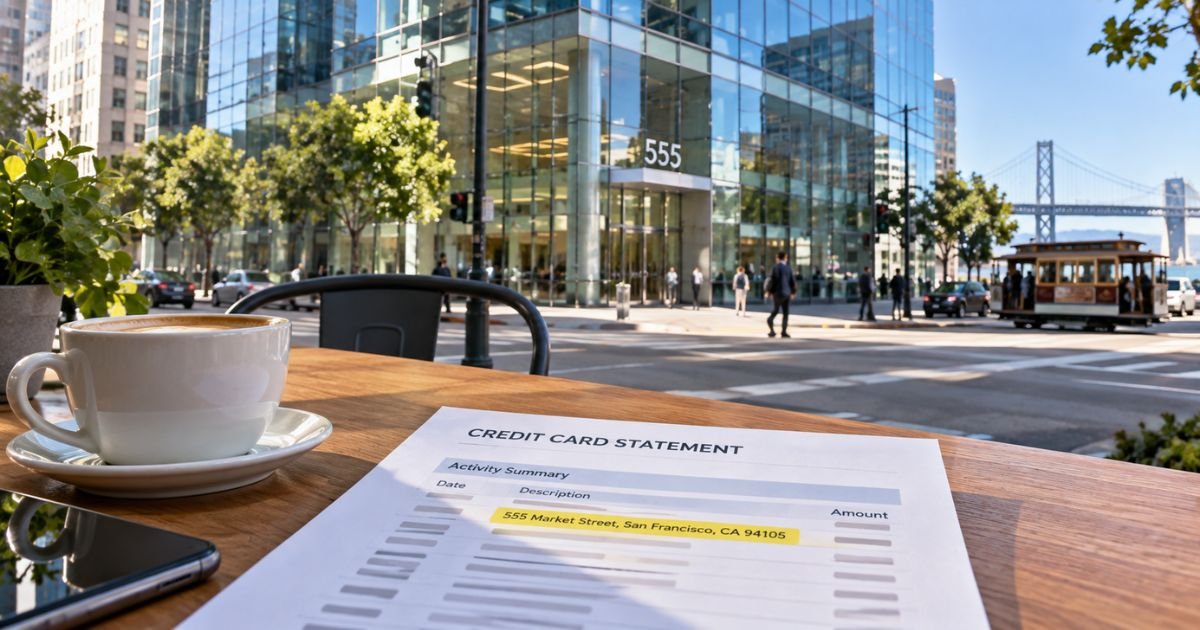
A 405 Howard Street San Francisco charge on a credit card can feel confusing if you do not recall visiting that city. The line looks like a store, but it is usually just an address a merchant or processor put on the payment.
In many cases the charge is legitimate and tied to a business in that building, or to a company that still uses the address in its card file. This guide explains what the building is, how to match the amount, and what to do next.
Table of Contents
What Is a 405 Howard Street San Francisco Charge on a Credit Card?
A 405 Howard Street San Francisco charge on credit card is typically a billing-address descriptor. Card networks often print the merchant’s registered street and city when the brand name is missing, truncated, or stored as an office address.
405 Howard Street is a real office tower at ZIP code 94105 in San Francisco’s South of Market area. The building is also called Foundry Square II or the Orrick Building. It sits near First Street and the Salesforce Transit Center.
It is not one shop. It is a multi-tenant office building with ground-floor retail and a parking garage.
Law firm Orrick has long been a major tenant. Other published occupants have included PwC and, more recently, Anthropic on a short-term lease.
You do not have to be in San Francisco for this line to post. Online and app payments can show the merchant’s office city, not the city where you sat.
How the charge may appear on your statement
Issuers shorten text. You may see only part of the address.
Common patterns include:
- 405 HOWARD ST SAN FRANCISCO CA
- 405 HOWARD STREET SF
- 405 HOWARD ST SAN FRANCISCO 94105
- HOWARD ST SAN FRANCISCO plus a dollar amount
- A brand name plus this address on the same line
Look at the full details in your issuer app. The category, any phone digits, and the exact time often help more than the street name.
| What you see | What it typically means | You were in San Francisco? |
|---|---|---|
| 405 Howard St only | Billing address for a tenant or processor | Not required |
| Address plus a brand | Easier to match to an app or invoice | Not required |
| Small same-day hold, then a final amount | Authorization, then the real total | Not required |
| Parking or garage-style amount | Building or nearby lot is possible | More likely if you visited |
Amounts vary too much to guess the merchant from dollars alone. Coffee, parking, an invoice, and an app order can all use the same street line.
Which businesses are tied to this address?
Treat tenant lists as a starting point, not a verdict.
Documented or commonly listed uses include Orrick, PwC, other professional tenants, ground-floor food, and building parking.
Uber Technologies Inc. once registered a location at 405 Howard St., suite 005. Public records show that location ended in 2013.
Some consumers still say a 405 Howard line matched an Uber or Uber Eats total. That is not proof that every charge is Uber.
Some explainer sites say Stripe bills from this address. Stripe’s published offices have not been this building. Treat that claim as unverified.
A truncated “Howard St San Francisco” line might also belong to a nearby building number, such as 500 Howard.
How to tell if the charge is yours
Start with the date, the exact amount, and the time.
Then check:
- Ride and delivery apps for that day
- Email receipts for “Howard,” “Orrick,” “PwC,” parking, or a San Francisco invoice
- Parking apps and garage tickets if you were downtown
- A law-firm, consulting, or vendor bill you paid by card
- Family cardholders who traveled or ordered food
If a pending amount later changes by a few dollars, that is often a tip, tax, or a hold dropping to the final total. It is not, by itself, a second purchase.
Pro Tip: Sort the issuer app by date and look at neighboring lines. A 405 Howard post sitting next to a known San Francisco trip or a food-app charge is usually the same outing.
Is a 405 Howard Street charge legitimate?
The address is legitimate. The building is a real, occupied office tower managed as commercial property. A charge that prints this street is often a normal card sale.
That does not make every dollar yours. Multi-tenant addresses hide the brand, so fraud can wear the same label. Match the amount before you relax, and match it before you panic.
There is no single BBB page for “405 Howard Street” as a merchant. Review the named company once you find it. Building management helps tenants and visitors. It does not reverse card sales.
What this charge usually is not
It is not a city tax with that street as the agency name. It is not proof you walked into that lobby. It is not, by itself, a secret subscription brand.
A one-time amount that never repeats is usually a purchase or a hold. A monthly amount with only this address and no app history deserves a closer look. Recurring drafts more often show a product name, but some small processors still print only a street.
What to do if you recognize the purchase
If the date matches a ride, meal, parking stay, or invoice, you are generally done. Save the receipt in case the merchant adjusts the total later.
If you want a refund for a bad meal or a parking error, contact that business. The office tower’s street address will not process a refund for a tenant’s sale.
What to do if you do not recognize the charge
Give yourself a short checklist before you dispute.
- Expand the transaction in your issuer app and note the time, amount, and any phone digits.
- Search email and texts for that exact dollar amount.
- Ask other cardholders.
- Check ride, food, parking, and travel apps.
- If nothing matches, call the number on the back of your card.
Credit card unauthorized-use rules are generally stronger than debit card rules. Federal billing-error notice for credit cards typically runs 60 days from the statement that first showed the charge. Issuers often let you tap Dispute in the app sooner.
A very small first charge can be a card-testing tap. If you do not recognize even $1.00, lock the card while you investigate.
Common Mistakes: Assuming every 405 Howard line is Uber, or assuming it is fraud because you have never been to San Francisco. Another misstep is calling building security for a refund. Security can help a visitor. It cannot unwind a card sale.
How to keep address-only charges from surprising you
- Turn on issuer alerts for every posted amount.
- Review pending charges the same day you travel or order in.
- Save app receipts until the statement posts.
You cannot cancel a street address. You cancel the underlying app or vendor account once you know the name.
FAQs: 405 Howard Street San Francisco Charge on Credit Card
Q. What is a 405 Howard Street San Francisco charge on a credit card?
A. It is usually the billing address for a business tied to the Orrick Building at 405 Howard Street, or for a merchant file that still stores that street. It is not a separate store called “405 Howard.”
Q. Is this charge from Uber or Stripe?
A. Not automatically. Uber once registered a short-lived location here, and some people still match the amount to Uber Eats. Stripe’s published offices are not this building. Check your apps first.
Q. Do I need to have been in San Francisco?
A. No. Online and app payments often print the merchant’s office city. A local parking or cafe charge is more likely if you were downtown that day.
Q. How do I dispute a 405 Howard Street charge?
A. Match the date and amount first. If nothing fits, use your issuer’s dispute or fraud tools and mention the address plus the exact total. Federal credit-card billing-error notice generally runs 60 days from that statement.
Conclusion
A 405 Howard Street San Francisco charge on a credit card is usually an address printed in place of a brand name. The building is a real multi-tenant tower. The sale may be parking, food, an invoice, an app, or another tenant.
Match the date and amount to your receipts and apps before you dispute. Use your issuer if the line still has no home. The street name alone does not prove fraud.
Disclaimer: This article is for general information only. It is not financial or legal advice. Merchant files, building tenants, and issuer descriptors change. Verify any question about your statement with your card issuer or the company that made the sale.
Meet the Author
