
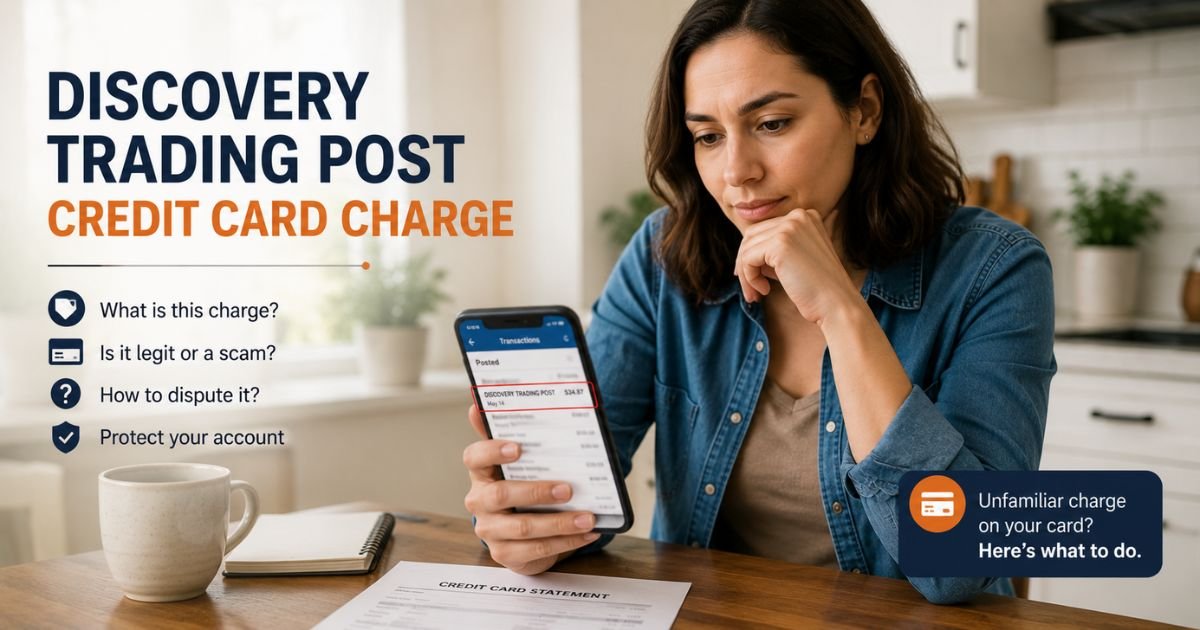
Seeing a Discovery Trading Post charge on credit card can feel confusing if the name does not match anything you remember. Unfamiliar charges are often legitimate once you match the date and amount to a recent purchase.
This guide explains what the charge may mean and what you can do next.
Table of Contents
What Is the Discovery Trading Post Charge?
Discovery Trading Post typically appears as a merchant descriptor for a retail purchase. Public information about a single, widely recognized national chain under this exact name is limited.
Existing consumer reports and similar explanations most often link it to a store or online seller that offers outdoor gear, general merchandise, or related products and services.
The charge usually reflects a completed purchase made in-store or online. Amounts vary based on what was bought.
Statement descriptors may appear as DISCOVERY TRADING POST or close variations depending on the card issuer and processor.
Why Did This Charge Appear?
Several common situations can produce a Discovery Trading Post charge.
- A recent purchase of outdoor gear, clothing, or general merchandise at the store or its online site.
- Payment for a workshop, event, or class hosted by the business.
- A membership or loyalty program fee if one was offered.
- A gift card purchase.
- A temporary authorization hold that later posted as the final amount.
Merchant names on statements sometimes differ from the brand name you see on a storefront or website. Matching the transaction date and amount to your own records is the most reliable way to confirm the source.
How to Verify the Charge
Use this checklist to identify the origin.
- Note the exact date, amount, and full descriptor on your statement.
- Think about recent shopping trips or online orders around that date.
- Search your email for receipts, order confirmations, or shipping notices.
- Check whether a family member or shared card user made a purchase.
- Contact your card issuer and ask for additional merchant details or the city associated with the charge.
- Search the exact descriptor online in quotes to see if others have identified it.
Your bank or card issuer can often provide more information than appears on the customer statement.
Is the Charge Legitimate or Fraud?
Most charges under a retail merchant name turn out to be ordinary purchases. Abbreviated or full store names are common on statements and do not automatically signal a problem.
Common legitimate explanations
- An in-store or online purchase of goods.
- An event fee or membership charge.
- A gift card or related transaction.
Warning signs
- No matching activity, receipt, or email on the charge date.
- Multiple unexpected charges under the same name.
- Amounts that do not align with any recent spending.
- The charge appears alongside other unrecognized activity.
When to contact the bank
If nothing matches your records after checking dates and receipts, contact your card issuer promptly. Most issuers set time limits for disputing unauthorized transactions.
Public details about this specific merchant remain limited. Treat each charge on its own facts rather than assuming a broader pattern.
How to Cancel Discovery Trading Post
Discovery Trading Post charges are typically one-time retail transactions rather than a known recurring national subscription.
- Identify the original purchase if possible.
- Contact the store or online account to request a return, refund, or removal of any saved payment method.
- If you cannot locate the business, ask your card issuer to block the merchant descriptor.
- Remove the card from any related online accounts.
- Monitor your next statement closely.
Keep written notes of every contact and confirmation.
Can You Get a Refund?
Refund options depend on the original merchant’s return policy and the reason for the request. Public details specific to Discovery Trading Post are limited.
Possible grounds for a refund or adjustment include:
- The goods were never received or arrived damaged.
- A clear duplicate or billing error.
- An unauthorized charge.
Start by gathering the statement details and any related receipts. Contact the merchant if you can identify it.
If that fails or the charge is unauthorized, open a dispute with your card issuer. Most banks follow timelines set by federal rules for investigating billing errors and unauthorized use.
What to Do If the Charge Is Unauthorized
- Collect the statement entry, date, amount, and any related emails or receipts.
- Attempt to identify and contact the merchant if possible.
- Call the number on the back of your credit card and report the charge as unauthorized.
- Ask your issuer to open a formal dispute and request provisional credit if available.
- Watch your account for further activity and consider replacing the card.
- Save all reference numbers and correspondence.
Act within your issuer’s dispute window for the strongest protection.
Prevention Tips
- Review credit card statements weekly or turn on real-time transaction alerts.
- Keep email confirmations and paper receipts for purchases.
- Note the full merchant name that appears on statements so future charges are easier to recognize.
- Use virtual or single-use card numbers for unfamiliar websites when available.
- Remove saved payment methods from accounts you no longer use.
- Check for small test charges that sometimes appear before larger ones.
FAQs: Discovery Trading Post Credit Card Charge
Q. What is the Discovery Trading Post charge on my credit card?
A. It is typically a merchant descriptor for a retail purchase. Public information most often links it to a store or online seller of outdoor gear or general merchandise. Match the date and amount to your own records to confirm.
Q. Is Discovery Trading Post a legitimate business?
A. Existing explanations treat it as a real retail merchant. Independent public details about a major national chain under this exact name are limited. Verify any specific charge against your receipts and contact your card issuer if needed.
Q. How do I find out exactly who charged me?
A. Start with the date and amount on your statement. Search your email and receipts. Then contact your card issuer and request additional merchant details. Banks can often see more information than appears on the customer statement.
Q. Can I stop future Discovery Trading Post charges?
A. If the charge came from a one-time purchase, future activity is unlikely. If it is tied to a membership or recurring service, contact the business or ask your bank to block the merchant descriptor. Monitor your statements closely afterward.
Conclusion
A Discovery Trading Post charge on credit card is most often a retail purchase processed under that merchant name. Public information about a single widely known national business under this exact descriptor is limited, so matching the date and amount to your own activity is the best first step.
Check your records, contact your card issuer for extra details if needed, and dispute anything that does not match. Staying organized with receipts and reviewing statements regularly keeps these charges from becoming ongoing worries.
Most unfamiliar descriptors resolve once you locate the original transaction. Stay calm, verify the facts, and use your bank’s tools when something does not add up.
Disclaimer: This article is for informational purposes only and is not financial or legal advice. Billing descriptors and merchant details can vary by issuer and processor. Always verify account-specific questions directly with your bank or the merchant when identified.
Meet the Author
