
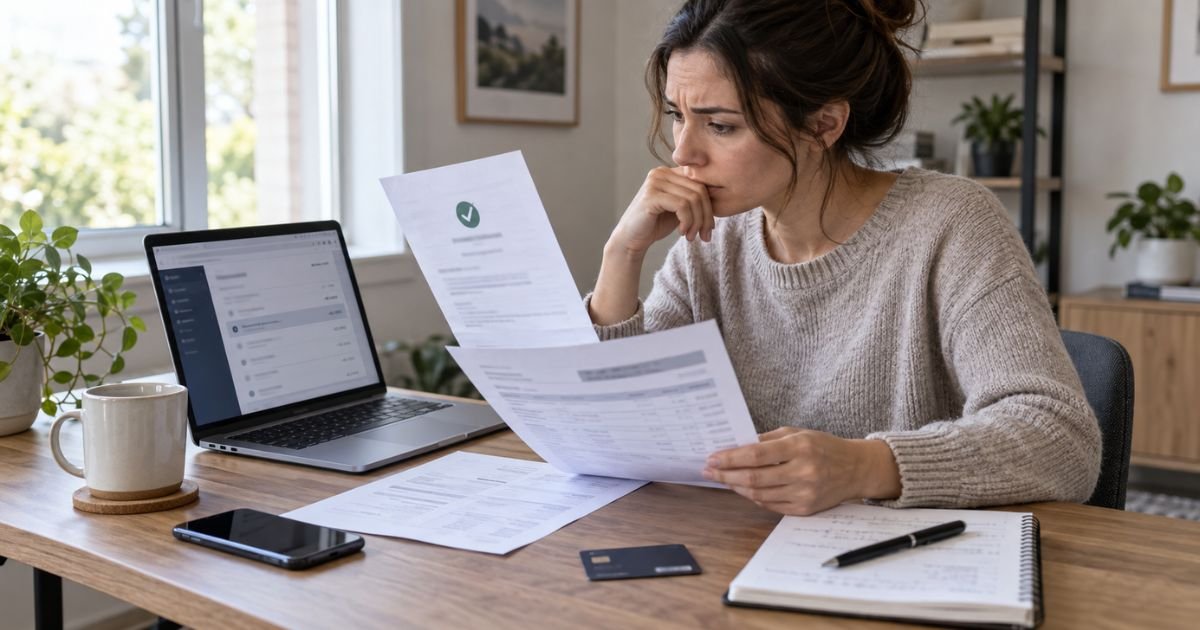
You can dispute a subscription charge after cancellation by gathering proof that you canceled the service, requesting a refund from the merchant, and contacting your credit card issuer if the charge remains unresolved.
The key is showing that the payment was collected after your cancellation should have taken effect.
A company might continue billing you because of a processing error, an incorrect cancellation date, an outstanding payment, or a subscription that was never fully canceled.
However, not every charge that appears after cancellation is necessarily incorrect. Some subscription agreements allow charges for billing periods that began before cancellation or require advance notice under clearly disclosed terms.
This guide explains how to dispute a subscription charge after cancellation, what evidence to collect, when to contact your bank, and how to stop unwanted recurring payments.
Table of Contents
How to Dispute a Subscription Charge After Cancellation: Step-by-Step
If a subscription company continues charging your credit card after cancellation, you should act quickly. A clear cancellation record and timely dispute can help you recover an incorrect charge.
Follow these steps to challenge the payment.
Step 1: Confirm That Your Subscription Was Canceled
Before filing a dispute, verify that your cancellation was completed.
Some subscription services require you to confirm cancellation through multiple screens. Others allow you to cancel renewal while keeping the service active until the current billing period ends.
Check your email for a cancellation confirmation and sign in to your subscription account to review its status.
Look for:
- The date you submitted your cancellation.
- The date the cancellation became effective.
- Confirmation that automatic renewal was disabled.
- Any final payment mentioned in the subscription agreement.
- The date of the unexpected charge.
For example, suppose you canceled a streaming subscription on June 10, received confirmation that billing would end immediately, and were charged again on July 10.
That timeline could provide strong evidence that the new charge was incorrect.
However, if you canceled after a renewal had already been processed, the company may argue that the payment covered the previous billing commitment.
Review the cancellation terms before filing your claim.
Step 2: Gather Proof of Cancellation
Your cancellation confirmation is often the most important evidence in a subscription billing dispute.
Gather any records showing that you requested cancellation before the disputed payment.
Helpful documents include:
Cancellation confirmation email
An email stating that your membership ended or automatic renewal was disabled.
Screenshot of your account
A screenshot showing that the subscription is canceled or inactive.
Customer support messages
Emails, chat transcripts, or support tickets confirming that you asked the company to stop billing you.
Credit card statement
A statement showing the charge that occurred after cancellation.
Subscription terms
The cancellation and renewal policy that applied when you signed up.
Keep copies of the original documents and organize them by date.
If you canceled by phone, write down the date, approximate time, representative’s name, and any confirmation number.
A clear timeline helps your credit card issuer determine whether the payment occurred after the merchant’s authorization to bill you had ended.
Step 3: Contact the Subscription Company and Request a Refund
Contact the merchant’s billing or customer support department and explain that you were charged after cancellation.
Provide your cancellation date, the disputed charge date, and your confirmation number if available.
Ask the company to refund the incorrect payment and confirm that no additional charges will occur.
For example, you might explain that you canceled your subscription on August 15, received confirmation that renewal was disabled, but were charged $29.99 on September 15.
Request a written response confirming whether the company will issue a refund.
If the merchant agrees, ask when the refund will be processed and monitor your credit card statement.
If the merchant refuses or does not respond, you can contact your card issuer.
Important: Do not delay a credit card dispute while waiting indefinitely for the merchant. Applicable dispute deadlines may continue running.
Step 4: Dispute the Subscription Charge With Your Credit Card Issuer
If the company refuses to refund the payment, contact your credit card issuer.
You can generally begin through your bank’s mobile app, website, or customer service number.
To submit the dispute online:
- Sign in to your credit card account.
- Locate the transaction in your payment history.
- Select the option to report a problem or dispute the charge.
- Choose the dispute reason that best describes the issue.
- Explain that the subscription was canceled before the disputed charge.
- Upload your cancellation confirmation and supporting documents.
- Submit the claim and save the reference number.
Choose the dispute reason carefully.
If you originally authorized the subscription but later canceled it, explain that the merchant continued billing after cancellation.
Do not describe the entire subscription as unauthorized if you knowingly signed up for it.
However, if you never authorized the subscription at all, report that fact accurately and ask your issuer to handle it as an unauthorized transaction.
Step 5: Send a Written Billing-Error Notice Within 60 Days
For qualifying credit card billing errors, the Fair Credit Billing Act provides an important dispute process.
To protect your rights, your written billing-error notice generally must reach your issuer within 60 calendar days after it sends the first statement containing the disputed charge.
The notice should include your name, account information, disputed amount, transaction date, and explanation of the error.
Send it to the billing inquiries address provided by your issuer. This address may differ from the address used for payments.
Calling customer service or filing an online dispute may not, by itself, satisfy the statutory written-notice requirements. Confirm the issuer’s accepted procedures and send a written notice through an appropriate channel.
Keep proof that the issuer received your notice.
Once a qualifying notice is received, the issuer generally must acknowledge it within 30 days unless it resolves the matter sooner.
The investigation must be completed within two complete billing cycles, but no later than 90 days.
Not every subscription-related disagreement qualifies as an FCBA billing error, so the legal process may depend on the circumstances.
Step 6: Track the Dispute and Respond to Requests
After submitting your claim, monitor its status through your bank’s online dispute center or mobile app.
Your issuer may request additional evidence, such as the subscription agreement or correspondence with the merchant.
Respond promptly and keep copies of anything you submit.
Some banks issue temporary credits while investigating.
A temporary credit does not mean the dispute has been permanently approved. It may be reversed if the issuer determines that you owe the charge.
If your dispute qualifies under FCBA billing-error procedures, you generally do not have to pay the disputed amount or related charges during the investigation.
You must continue paying undisputed portions of your credit card bill on time.
When the investigation ends, review the final written decision and verify whether the disputed amount was removed.
Sample Letter to Dispute a Subscription Charge After Cancellation
If you need to submit a written dispute, use this template and adjust it to match your circumstances.
Subject: Dispute of Subscription Charge After Cancellation
Dear Billing Dispute Department,
I am writing to dispute a subscription charge that appeared on my credit card account after I canceled the service.
Account Number: XXXX-XXXX-XXXX-1234
Merchant Name:
Disputed Amount: $
Transaction Date:
Cancellation Date:
I canceled my subscription on and received confirmation that the cancellation was effective on .
However, the merchant charged my credit card on , after the cancellation should have taken effect.
I contacted the merchant on to request a refund, but the issue remains unresolved.
I have attached supporting documents, including my cancellation confirmation, credit card statement, and relevant correspondence with the merchant.
I request that you investigate this transaction and correct the charge if it was made in error.
Please provide written confirmation of the investigation results.
Sincerely,
Submit the letter to your issuer’s designated billing-dispute address rather than its regular payment address.
Keep a copy of the letter and supporting documents for your records.
Can You Dispute a Subscription Charge if You Forgot to Cancel?
Forgetting to cancel a subscription does not automatically make a renewal charge incorrect.
If you knowingly agreed to recurring payments and the company charged you according to clearly disclosed terms, the transaction may be valid.
However, you may have grounds to challenge the payment if the merchant failed to disclose important renewal terms, made cancellation unreasonably difficult, or charged an amount you did not authorize.
Start by reviewing the subscription agreement and contacting the merchant.
If the renewal was valid but unwanted, you can still request a courtesy refund.
Whether the company must provide one depends on the agreement and applicable consumer protection laws.
What if You Canceled During a Free Trial but Still Got Charged?
Free trials often convert into paid subscriptions unless canceled before a specified deadline.
If you canceled before the trial ended but still received a charge, gather evidence showing when cancellation occurred.
For example, if your trial was scheduled to end on May 20 and you received confirmation of cancellation on May 18, a charge on May 21 may be disputable.
Check the trial’s terms carefully, including the cancellation deadline and effective date.
If the company refuses to refund a charge that appears inconsistent with those terms, contact your credit card issuer.
You can also report misleading trial or cancellation practices to the Federal Trade Commission (FTC).
Can You Dispute Multiple Subscription Charges After Cancellation?
Yes, you can ask your card issuer to review multiple charges that occurred after cancellation.
However, each transaction may need to be identified separately.
Suppose you canceled a subscription in January but continued receiving monthly charges through April.
Your issuer may ask you to provide the cancellation confirmation and identify the January, February, March, and April transactions individually.
Be aware that the 60-day FCBA notice period is tied to the first statement containing each alleged billing error. Older charges may fall outside statutory billing-error protections even if newer charges remain eligible.
Other chargeback options or consumer remedies may still be available.
Contact the issuer promptly and request a review of all affected transactions.
How to Stop a Subscription From Charging Your Credit Card Again
Disputing a past payment does not automatically cancel future subscription charges.
You must address the recurring payment arrangement separately.
First, confirm that the merchant has canceled your subscription and disabled automatic renewal.
Request written confirmation that no additional payments will be collected.
If the merchant continues billing you, contact your issuer and explain that you have withdrawn authorization for future recurring charges.
Ask what options are available to stop further payments.
Depending on the issuer and payment arrangement, it may offer merchant-specific blocking or other account protections.
Do not assume that replacing your credit card will permanently stop the subscription. Some recurring-payment arrangements can continue through automatic card-information updates.
Continue checking your statements after cancellation.
If another charge appears, report it promptly.
What if Your Bank Denies the Subscription Charge Dispute?
If your issuer rejects the claim, request its written explanation.
Review the reason for denial and compare it with your cancellation records.
The merchant may have submitted evidence that the subscription remained active, that cancellation occurred after the renewal date, or that the charge covered an earlier billing period.
If you believe the evidence is incorrect, ask whether your bank allows reconsideration.
Provide any additional information that directly addresses the reason for denial.
If you believe your issuer mishandled a qualifying billing-error dispute, you may also submit a complaint to the Consumer Financial Protection Bureau (CFPB).
A complaint does not guarantee a refund, but it provides a formal channel for requesting a response.
FAQs: How to Dispute a Subscription Charge After Cancellation
Q. Can I dispute a subscription charge if I have no cancellation email?
A. Yes. You can provide other evidence, such as account screenshots, support messages, cancellation confirmation numbers, or records of phone conversations. Explain when and how you canceled the subscription.
Q. How long do I have to dispute a subscription charge after cancellation?
A. For qualifying FCBA billing errors, your issuer generally must receive written notice within 60 calendar days after sending the first statement showing the charge. Other card-network dispute deadlines may apply, so contact your issuer promptly.
Q. Will canceling my credit card stop subscription payments?
A. Not necessarily. Some merchants may receive updated card information through recurring-payment services. Cancel the subscription with the merchant and ask your issuer about options to prevent further charges.
Q. Can I get a refund for a subscription I already canceled?
A. You may be entitled to a refund if the charge was collected after cancellation became effective and was not permitted under the applicable agreement or law. The outcome depends on your evidence, subscription terms, and dispute circumstances.
Conclusion
Knowing how to dispute a subscription charge after cancellation can help you recover incorrect payments and prevent unwanted recurring charges.
Start by confirming your cancellation date and collecting supporting documents. Contact the merchant for a refund, then dispute the payment with your credit card issuer if the issue remains unresolved.
Pay attention to applicable deadlines and keep records of every communication.
Your next step is to compare your cancellation confirmation with the unexpected charge and submit a refund request or credit card dispute promptly.
Disclaimer: This article provides general educational information about U.S. credit card disputes and subscription billing. It is not legal or financial advice. Refund eligibility, dispute deadlines, and consumer protections vary based on the subscription agreement, payment method, applicable law, and individual circumstances. Contact your credit card issuer or a qualified consumer protection professional for guidance specific to your situation.
Meet the Author
