
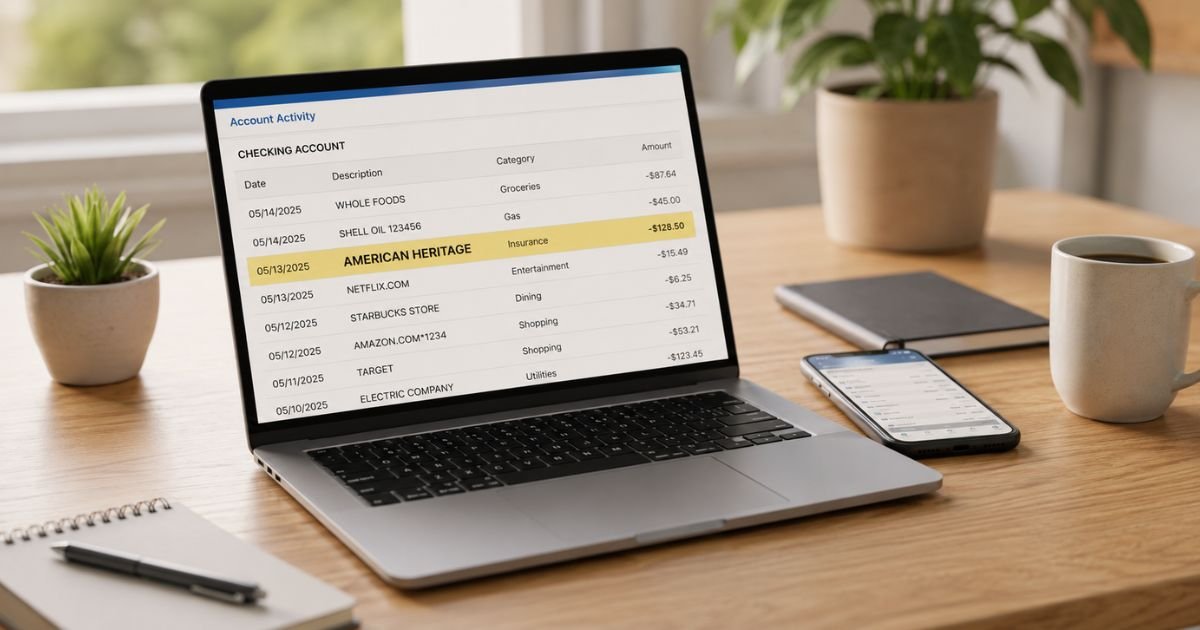
Noticing an American Heritage charge on bank statement can feel unsettling if you don’t recall authorizing it.
Many people see variations like “AMERICAN HERITAG,” “AMERICAN HERITAGE DES:EFT DEBIT,” or similar and wonder if it’s a fee, subscription, insurance premium, or something unauthorized.
In most cases the charge is legitimate, but you should still verify it.
This article explains the common sources behind the charge, why it appears, how to confirm it belongs to you, and practical steps to cancel, seek a refund, or report it if needed.
Table of Contents
What Is an American Heritage Charge?
“American Heritage” on a bank or credit card statement usually points to one of a few companies that use similar names:
- American Heritage Federal Credit Union (AHFCU), a Pennsylvania-based credit union. Members see charges related to loans, credit cards, account fees, or transfers.
- American Heritage Life Insurance Company (part of Allstate Benefits / The Standard). This often appears for workplace or group insurance premiums paid by automatic bank draft.
- American Heritage Publishing (americanheritage.com), the long-running U.S. history magazine and related content. Older print or membership subscriptions sometimes post as EFT debits.
- Regional banks named American Heritage Bank in certain states.
Common billing descriptors include:
- AMERICAN HERITAG
- AMERICAN HERITAGE DES:EFT DEBIT
- AMERICAN HERITAG BENMAN ACH
- Similar shortened versions limited by bank character limits
The exact wording and amount help identify which company is involved.
Why Did This Charge Appear?
Here are the most frequent reasons:
- Recurring insurance premium through American Heritage Life (often tied to an employer benefits plan).
- Magazine or membership subscription renewal from American Heritage Publishing.
- Loan payment, credit card payment, or account fee from American Heritage Federal Credit Union if you are a member.
- One-time purchase, initial enrollment, or free-trial conversion that became paid.
- A family member or joint account holder authorized the payment.
- ACH payment or correction processed through one of these companies.
- Rare cases of duplicate billing or an authorization hold that later posted.
If you have never done business with any of these entities, treat the charge with extra caution.
How to Verify the Charge
Follow this checklist:
- Note the exact amount, date, and full descriptor on your statement.
- Search your email for “American Heritage,” “Allstate Benefits,” or related confirmations.
- Check any employer benefits portal or HR records for insurance deductions.
- Review past mail or online accounts for magazine subscriptions.
- Log into American Heritage Credit Union Online Teller (if you are a member) and look at recent activity.
- Ask household members whether they authorized a related payment.
- Compare the amount against known premiums or subscription prices.
Matching records usually confirm the charge is expected.
Is It Legitimate or Fraud?
Common legitimate scenarios
Most American Heritage entries are authorized recurring payments for insurance, a subscription, or credit-union activity. Workplace benefits often route premiums through American Heritage Life under the Allstate Benefits name.
Warning signs
- You have no memory of any related account, policy, or subscription.
- The amount is unusual or appears multiple times.
- You receive pressure calls or emails claiming urgent payment is due.
- The charge posts on a card you never linked to any of these companies.
If something feels wrong, contact your bank right away and open a dispute while also reaching out to the company listed on the charge.
How to Cancel
Steps depend on the source:
For American Heritage Life Insurance premiums
Call Allstate Benefits customer service at (800) 521-3535 (Monday–Friday, 8 a.m.–8 p.m. ET). Have your policy number ready if available.
Request cancellation of the automatic payment authorization and written confirmation. You may also need to contact your employer’s benefits administrator.
For American Heritage Federal Credit Union
Log into Online Teller or call the Contact Center at 215.969.0777 or 800.342.0008. Request to stop the specific payment, close a related loan or card, or update automatic transfers.
Email GeneralInfo@amhfcu.org for written follow-up.
For American Heritage Publishing / magazine
Visit americanheritage.com and use the contact forms under “Contact Us.” Request cancellation of any paid subscription or membership and ask for confirmation that future billing will stop. Keep records of your request.
After canceling, monitor your bank statement for one to two billing cycles to confirm the charges have stopped.
Can You Get a Refund?
Refund options vary:
- Insurance premiums may be refundable for unused coverage periods according to the policy terms. Contact the insurer promptly.
- Magazine or membership charges can sometimes be refunded if you cancel within the company’s stated window or if the charge was unauthorized.
- Credit-union fees follow their published schedule of fees and charges.
For any charge you believe is incorrect or unauthorized, start a dispute with your bank or card issuer.
Under federal rules, banks generally investigate debit-card claims under Regulation E and credit-card claims under the Fair Credit Billing Act.
Provisional credit is often available within 10 business days, with full resolution in 45–90 days.
Provide the bank with the transaction details, any cancellation confirmation, and a clear explanation.
What to Do If the Charge Is Unauthorized
- Contact your bank or card issuer immediately and report the transaction as unauthorized.
- Request a card freeze or replacement if the charge involved a debit or credit card.
- Call or email the company that appears on the statement and ask them to investigate and stop further billing.
- Change passwords on any related accounts and enable two-factor authentication.
- Document every conversation (dates, names, reference numbers).
- Monitor your statements and credit reports for 60–90 days.
- File a report at IdentityTheft.gov if you suspect identity theft.
Acting quickly protects your liability limits.
Prevention Tips
- Review every bank and credit-card statement shortly after it posts.
- Keep a simple list of all automatic payments and the companies behind them.
- Use unique passwords and two-factor authentication on financial and benefits accounts.
- Set transaction or low-balance alerts in your bank app.
- When enrolling in workplace benefits, note which insurers handle the premiums.
- Cancel unused subscriptions and memberships in writing and keep the confirmation.
- Avoid linking bank accounts to free trials unless you intend to continue.
- Periodically check your credit reports for unfamiliar accounts.
Common Sources of American Heritage Charges
| Likely Source | Typical Descriptor | Usual Purpose |
|---|---|---|
| American Heritage Life Insurance | AMERICAN HERITAG or BENMAN ACH | Insurance premium |
| American Heritage Publishing | AMERICAN HERITAG DES:EFT DEBIT | Magazine/subscription |
| American Heritage Federal Credit Union | AMERICAN HERITAGE or similar | Loan, card, or account activity |
| Regional American Heritage Bank | Varies by institution | Banking fees or transfers |
Typical Dispute Timeline
| Step | Usual Timeframe |
|---|---|
| Bank provisional credit | Within 10 business days |
| Full bank investigation | 45–90 days |
| Company response to cancellation | Several business days to 2 weeks |
| Confirmation of stopped billing | 1–2 billing cycles |
FAQs: American Heritage Charge on Bank Statement
Q. Why does my statement say AMERICAN HERITAG instead of the full name?
A. Banks limit the number of characters in descriptors. “AMERICAN HERITAG” is a common truncation of American Heritage used by multiple companies.
Q. Is an American Heritage charge always a subscription?
A. No. It is frequently an insurance premium, especially if the amount is consistent month to month and you have workplace benefits. It can also be a credit-union transaction if you are a member.
Q. How do I stop future American Heritage charges?
A. Identify the source using the steps above, then cancel the automatic payment with that company and request written confirmation. Follow up with your bank if charges continue.
Q. What if I never signed up for anything related to American Heritage?
A. Treat it as potentially unauthorized. Contact your bank to dispute the charge and reach out to the company listed for clarification. Keep all records.
Conclusion
An American Heritage charge on bank statement is usually tied to insurance premiums, a magazine subscription, or credit-union activity.
By matching the amount and descriptor to your records, contacting the right company, and using your bank’s dispute process when needed, you can resolve the charge and prevent future surprises.
Stay proactive with statement reviews and automatic-payment lists so unfamiliar entries become rare.
Disclaimer: This article is for informational purposes only and is not financial, legal, or insurance advice. Company policies, fees, and contact details can change. Always verify information directly with the relevant company, your bank, or a qualified professional before taking action.
Meet the Author
