
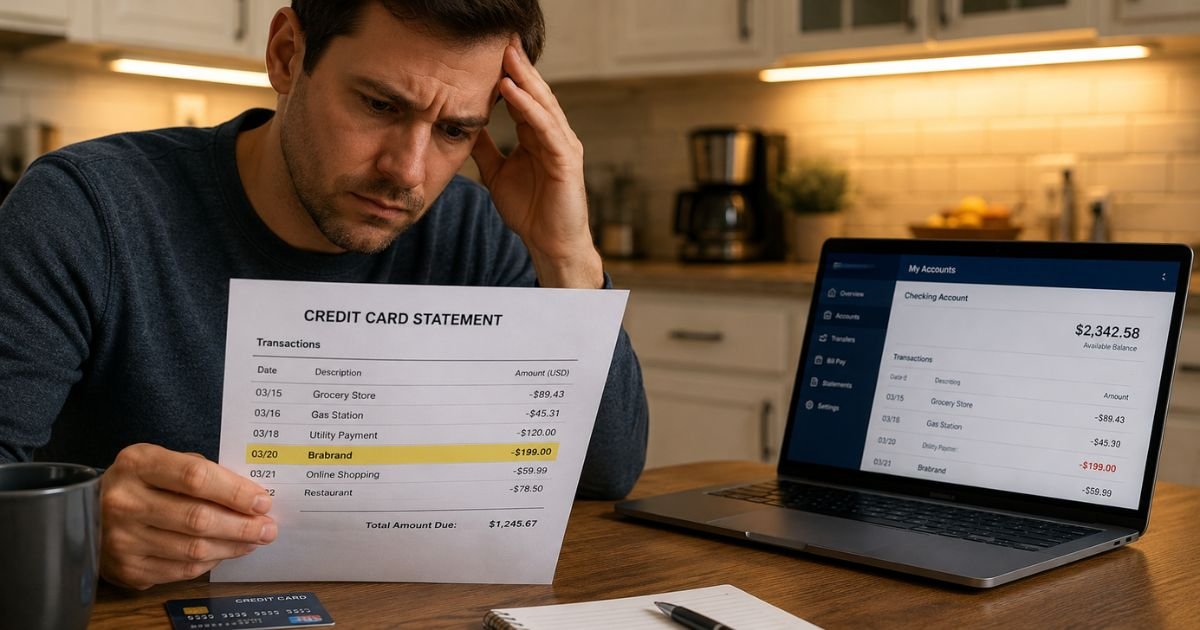
Seeing an unfamiliar charge labeled something like “Brabrand,” “Bitinvestor Brabrand DK,” or “Swapped Brabrand” on your credit card statement can feel alarming.
Most people in this situation have no idea what the charge is for or whether their card details were used without permission.
The good news is that many of these charges turn out to be legitimate purchases, often related to cryptocurrency. However, you should always verify them quickly.
This guide explains exactly what the Brabrand charge on credit card is, why it appears, how to check if it is yours, and the steps to take if it is not.
Table of Contents
What Is the Brabrand Charge?
Swapped ApS operates swapped.com, a platform that lets users buy, sell, and swap cryptocurrencies.
The company is registered in Denmark at an address in Brabrand and is supervised by the Danish Financial Supervisory Authority. It serves customers in many countries, including the United States.
On credit card statements, the charge often appears with a descriptor that includes the company’s location, such as:
- Bitinvestor Brabrand DK
- Swapped Brabrand
- Brabrand DK
- Similar variations with “Mercuryo” or other processors sometimes listed nearby
These descriptors are common with international merchants. The actual company name may not match the brand customers see on the website, which is why the charge looks unfamiliar.
The transaction itself is usually a one-time purchase or exchange of cryptocurrency rather than a subscription.
Why Did This Charge Appear on My Statement?
Several common reasons explain why a Brabrand charge shows up:
- You or a family member bought cryptocurrency. Someone with access to the card used it on swapped.com to purchase or swap crypto.
- Authorized user activity. A spouse, child, or other card user completed a transaction without telling you.
- International transaction processing. Because the company is based in Denmark, the charge routes through international payment networks and may include a foreign transaction fee.
- Compromised card details. In some reported cases, stolen card information was used on crypto platforms, including services connected to this descriptor. This often appears alongside other suspicious charges from gaming or payment processors.
- Pre-authorization or pending hold. Some crypto purchases create a temporary hold that later posts as the final amount.
Crypto transactions are usually processed quickly and are difficult to reverse once they hit the blockchain.
How to Verify the Brabrand Charge
Follow these steps in order:
- Log into your credit card account online or in the app and look for any pending or posted transactions with similar names.
- Check your email (including spam folders) for confirmation messages from swapped.com, Bitinvestor, or Swapped ApS.
- Search your browser history or saved passwords for “swapped.com” or “bitinvestor.”
- Ask authorized users on the account whether they made any crypto purchases recently.
- Contact Swapped support at support@swapped.com if you have an account or recent activity. Provide the transaction date and amount.
- Call the number on the back of your credit card and ask for the full merchant name and any additional details available on the transaction.
Write down the exact descriptor, date, and amount before you call your bank. This information helps during any dispute.
Is It Legitimate or Fraud?
Legitimate scenarios include a recent crypto purchase you or someone on your account made through Swapped. The company is a real, regulated business, and many customers use it without issues.
Warning signs of potential fraud include:
- No memory of any crypto purchase
- Multiple charges from different unfamiliar merchants on the same day
- A large amount you would never spend on cryptocurrency
- No confirmation email from the company
- The charge appears while your physical card was in your possession
Credit cards offer strong protection against unauthorized charges under the Fair Credit Billing Act. You are generally not responsible for charges you did not make or authorize. However, the sooner you report it, the better.
How to Cancel a Brabrand Charge
Most cryptocurrency purchases through services like Swapped are final once processed. Blockchain transactions cannot be reversed by the merchant or the card network in the same way as regular retail purchases.
If the charge is very recent and you have an account:
- Log into swapped.com immediately and check for any open orders or pending transactions.
- Contact their support team right away and explain the situation.
- Ask them to cancel or reverse the transaction if it has not yet been completed on the blockchain.
If you do not have an account or did not make the purchase, do not try to “cancel” through the merchant. Instead, dispute the charge directly with your credit card issuer.
Can You Get a Refund?
It depends on whether the charge was authorized.
- Authorized purchase: Swapped’s refund policy for crypto transactions is typically limited because cryptocurrency values change rapidly. Contact their support first, but expect that many crypto buys are non-refundable.
- Unauthorized charge: You have strong rights. Credit card issuers must investigate and usually remove the charge while they investigate. You are protected up to the full amount under federal law for unauthorized use. Report the charge as soon as you discover it.
Act quickly. The longer you wait, the harder it can be to recover funds, especially with international merchants.
What to Do If the Charge Is Unauthorized
If you determine the Brabrand charge was not made by you or an authorized user, take these steps right away:
- Call your credit card issuer immediately. Report the charge as unauthorized, request a dispute, and ask them to block the card and issue a new one.
- Follow up in writing. Send a dispute letter within 60 days of the statement date that shows the charge. Keep copies of everything.
- Monitor your account daily. Watch for any additional suspicious charges while the card is being replaced.
- File a report with the FTC. Go to IdentityTheft.gov to create an official report. This helps with any future issues.
- Consider a credit freeze or fraud alert. Contact one of the three major credit bureaus to place a free fraud alert or security freeze.
- Keep records. Save all emails, call notes, and reference numbers from your bank and the merchant.
Your card issuer will usually provisionally credit your account while they investigate. Most legitimate disputes are resolved in the customer’s favor when there is no authorization.
Prevention Tips
Protect yourself from surprise charges like this in the future:
- Turn on real-time transaction alerts for every credit card you carry.
- Review your statements at least once a week, not just when the bill arrives.
- Use virtual card numbers or single-use cards for online purchases when your card issuer offers them.
- Never save card details on websites you do not fully trust.
- Enable two-factor authentication on any crypto accounts you create.
- Be extremely cautious about entering card information on sites that promise quick crypto gains or “investment opportunities.”
- Limit the number of people who have access to your physical cards or card details.
- Use a dedicated card with a low limit for online and international purchases.
- Consider credit monitoring services if you have experienced fraud before.
- Avoid clicking links in unsolicited emails or texts that ask for card information.
Common Descriptor Variations
| Descriptor on Statement | Likely Meaning |
|---|---|
| Bitinvestor Brabrand DK | Crypto purchase via Swapped/Bitinvestor |
| Swapped Brabrand | Same company, different processing name |
| Brabrand DK | Location-based descriptor for the Danish merchant |
| Combined with Mercuryo or similar | Often seen together in mixed transaction reports |
Refund and Dispute Timelines
| Action | Typical Timeline | Notes |
|---|---|---|
| Report to card issuer | Same day | Provisional credit often issued quickly |
| Written dispute deadline | Within 60 days of statement date | Required for full protection |
| Issuer investigation | 30–90 days | They must investigate and respond |
| Crypto merchant refund | Varies or not available | Blockchain transactions are usually final |
FAQs: Brabrand Charge on Credit Card
Q. Is Swapped or Bitinvestor a legitimate company?
A. Yes. Swapped ApS is a real company registered in Denmark and supervised by the Danish Financial Supervisory Authority. It operates the swapped.com platform for cryptocurrency transactions. However, like any financial service, it can be used by unauthorized parties if card details are stolen.
Q. Can I get my money back from a Brabrand charge?
A. If you authorized the purchase, refunds are limited because crypto transactions are difficult to reverse. If you did not authorize it, contact your credit card issuer immediately. Credit cards generally offer strong protection for unauthorized charges, and you can usually dispute the full amount.
Q. How long do I have to dispute an unauthorized Brabrand charge?
A. You should report it as soon as you notice it. For credit cards, you generally have up to 60 days from the date the statement containing the charge was sent to submit a written dispute. Acting faster improves your chances of a smooth resolution and helps prevent additional charges.
Q. What should I do if I see multiple charges including Brabrand?
A. Multiple unfamiliar charges on the same day, especially mixed with other international or crypto-related descriptors, are a strong sign of fraud. Contact your card issuer right away to report all of them, request a new card, and begin the dispute process for every unauthorized transaction.
Conclusion
A Brabrand charge on credit card almost always traces back to a cryptocurrency transaction processed by Swapped ApS, a Danish company located in Brabrand. In many cases it reflects a purchase you or someone on your account made.
When you do not recognize the charge, however, it is important to verify it immediately and dispute it with your card issuer if it was not authorized.
Stay calm, act quickly, and use the steps in this guide. Most people who follow the verification and dispute process resolve the issue without lasting financial harm.
Keep monitoring your statements and alerts going forward so similar surprises do not catch you off guard again.
Disclaimer: This article is for informational purposes only and is not financial, legal, or investment advice. Cryptocurrency involves significant risk and volatility. Always verify charges directly with your card issuer and the merchant. Policies and protections can change, so confirm current procedures with your financial institution.
Meet the Author
